Showing posts with label Sourdough. Show all posts

Sunday, September 23, 2012

Sourdough Waffles: The King is Back

Andy and I make a batch of sourdough waffles or sourdough pancakes once a week from our NYC grown, Northampton transplanted sourdough starter.  We do this partially for starter care, to keep it in regular use by supplementing bread baking with breakfast foods, and partially because we are addicted to decadent and hearty breakfasts.

Here's what happened this morning...  Andy got out of bed before me (this almost never happens) and was antsy to whip up a waffle batter.  Since the usual sourdough waffle or pancake recipe comes straight from my head and my head was still half dreaming I told him to try the Sourdough Waffle recipe in King Arthur Flour Baker's Companion** as a jumping off point.

So now, the Pumpkin Queen has been reunited with The King (Arthur) on the UYS.

Andy didn't get too adventurous in his adaptation, only halving their recipe all except for the eggs.  The boy likes eggy waffles.

Sourdough Waffles
Adapted from King Arthur Flour Baker's Companion
Yields about 8 round seven-inch waffles

Sponge
1/2 cup all purpose flour
1/2 cup white whole wheat flour
1 tablespoon sugar
1 cup buttermilk (we used powdered buttermilk/water)
1/2 cup sourdough starter

Batter
2 large eggs
1/4 stick butter, unsalted and melted
1/4 teaspoon salt
1/2 teaspoon baking soda

Combine all the ingredients for the sponge and let it sit for as little as 5 minutes and as long as 8 hours.
Beat together the eggs, butter salt and baking soda.
Blend the batter mixture into the sponge.
Know your waffle iron and spray or butter it for the first waffle if it tends to get grabby.
Last nights homemade whipped cream (that topped KAF's Classic Pumpkin Pie)
turned into whipped butter this morning
Notes and Variations:
So, the waffle batter I typically throw together is a bit thicker than this one, my liquid to flour ratio is closer to the one we use for pancakes.  I noticed that with this thinner batter there is a fine line to walk in terms of filling the waffle iron.  It's a line well worth walking because the waffles turn out so perfect once you figure out exactly how much batter to add.  Just be aware, overfill and you get spill over, under fill and you get hole-y waffles.
Exhibit A
What I really love about this recipe, besides that is makes delicious, light waffles, is that you can let the sponge sit overnight if you've planned ahead for waffles, or "for whatever shorter time span is practical."  That's a big deal.

Some variations I plan to try in the future are supplementing a tablespoon of applesauce for half the butter and adding some ground flaxseed to the sponge.  And clearly I'm nuts for lots of fruit and nut combos.

I'm wa-full,
Sarah

**This book is one of the best gifts I've ever received.  I am so lucky to have great cousins to gift it to me.  Thanks!  If it's not on your bookshelf already I recommend you put it on your birthday/holiday wish lists and wedding registries ASAP.

Thursday, March 29, 2012

Returning Reinhart


So, tomorrow I will return Reinhart's Artisan Breads Everday.  I tried to renew it but it is on hold and library late fees are embarrassing.  I ended up making two different loaves from his book.  The first was his version of San Francisco Sourdough.  He offers an option (not "purist") where you add in instant yeast.  It was superb.  

Sourdough starter

Mixed dough

Kneaded dough
 The nice part about it (for a household of two, especially) is that you can divide the dough in half and cook part that day and the other part up to three days later.
half to rest in the fridge

half to rise at room temp


I would be lying if I said I did everything according to his recipe.  We were almost out of bread flour so I used 1 1/2 cups white whole wheat, 2 1/2 cups all purpose flour and 4 T vital wheat gluten.  I ended up kneading the dough with about 1/4 cup of whole wheat flour.  The other ingredients were just water, salt, instant yeast, and of course, 1/4 cup of mother starter mixed with 1 3/4 cups bread flour and just over 1/2 cup of water.  That initial starter ferments overnight (6-8 hours) before combining it with the other ingredients to form the final dough.  I hadn't ever used bread flour for the starter before.  I was thinking that's what made this bread so phenomenal...  

Then, I tried his Pain au Levain.  Oh my god.  Oh mon dieu!  And ay dios mio too.  The Pain au Levain also called for bread flour (which we restocked) and whole wheat (also restocked).  I don't have a single photograph to share because this bread was eaten with soups and as toast and made into sandwiches with unprecedented speed.  It was gone within days.  It was amazing.  Absolutely amazing.  I did the same drill of halving the dough and baking some on the first day and retarding the other half.  The other halves definitely have a more developed taste than their younger versions but the texture of the bread seems to suffer from the prolonged rising period.  While eating his first slice of Pain au Levain Andy announced, "This is bread.  Wow."  And decided we could enter it in some sort of bread baking contest, if there ever was such a thing.  (I am sure there is).  This cookbook is officially on my wish list.

Now for another 8PM bedtime.  I miss my appendix.
-S 


Saturday, March 10, 2012

The Library: March comes in like a lion and out like an appendix

Today I walked to the library.

This might not seem like a huge feat since the library is all of 3/4 mile from home and it's, well, the library. But I had an appendectomy on Sunday night and this was my greatest venture out into the world since surgery.  I picked up three books: Peter Reinhart's Artisan Bread Everyday, Ree Drummond's The Pioneer Woman Cooks, and Tracy Kidder's Home Town.


Perusing Ree Drummond's book prompted two actions.  The first was a shopping list for a vegetarian version of her pot pie.  Andy is at the store fulfilling the ingredients list as I type.  The second action is this - me typing a blog post after a long, long hiatus!  Although blog posts have been few and far between, rest assured that I have been baking bread and LOTS of sourdough pancakes.  I know Lil has baked at least a few loaves in her many cooking endeavors.  No longer in the quaint and cozy Upper East Side tenement building we called home for two years, we both lost the lust for bread blogging, definitely not baking/cooking though.  Unfortunately, I had to lose my appendix to remember how fun this blog was... but here I am, sitting up and typing a return-to-blogging-post!

Like I mentioned, sourdough pancakes are a regular weekly treat.  I also got in the habit of baking something I, very creatively, named "Northamfrancisco Sourdough" inspired from a Bread Alone by Daniel Leader and Judith Blahnik recipe for San Francisco Sourdough.  I don't have any photos of it today but I have baked at least a dozen loaves/variations of this recipe.


Northamfrancisco Sourdough
Recipe inspiration from Bread Alone
Yields two loaves

Established sourdough starter
Water
Oil
1 1/2 cups All-purpose flour (and more for kneading)
3 cups bread flour
2 cups rye flour OR 2 cups whole wheat flour
2 tablespoons ground flax seeds
1 tablespoons sea salt
caraway seeds or rosemary (optional, but why not!?)

Start the poolish by combining 2/3 cup starter, 1 cup water, and 1 1/2 cups all-purpose flour.  If you have a scale (like Lily), 8 ounces of each.
Allow the poolish to ferment, covered for 24 hours.
For the final dough, combine 3 cups bread flour, 2 cups rye/whole wheat flour, 2 tablespoons ground flax seeds, 1 tablespoon sea salt, and caraway seeds or rosemary to your liking
Combine the poolish with the dry contents of the large mixing bowl.  A lot depends on the consistency of your starter, but you will likely need to add water (room temperature) here to create the final dough.
Once your dough is impossible to stir, place it on a floured countertop and get kneading!  16 minutes!  "The dough is ready when a little dough pulled from the mass springs back quickly."
Shape the dough into a ball and place it into an oiled, large bowl.  Turn once to coat with oil.  Ferment the dough for 2 1/2 hours until doubled in volume.
Deflate and transfer the dough to a floured surface to rest for 30 minutes.  Honestly, I sometimes skip this step if I am impatient.  The Bread Alone recipe actually does this twice.  That's an hour more wait time for bread!
After 30 minutes, or an hour, or no time at all, divide the dough into two long torpedoes.  "The torpedo is the classic San Francisco sourdough shape."  If you prefer to be rebellious, shape the dough into boules.
Proof the loaves for 1 hour (until they are 1-1/2 times increased in volume), covered with a clean, damp cloth or plastic wrap.
Preheat the oven to 450 degrees.  Before baking, spritz the loaves with water and add more rosemary/caraway seeds on top.
Bake the loaves for 15 minutes, decrease the oven temperature to 425 and bake an another 15 to 20 minutes.  Total bake time will be about 35-45 minutes.
Try to cool completely on a wire rack before tasting.  I have never been able to wait...


So, besides blogging, I actually started a loaf from Artisan Breads Everyday - it's Reinhart's version of San Francisco sourdough bread.  It's just a baby "wild yeast starter" now (aka poolish) but in 6 to 8 hours it will be bigger!


Here's the sourdough mama, happy and farting little "hello" bubbles to you, Lil.


Your turn,
XO S

PS No pressure.  If nothing else becomes of this attempt at re-energizing the bread blog, I now have recorded instructions for that Northamfrancisco bread in a safer place than a yellow post-it!

Sunday, May 8, 2011

Sourdough Pancakes III

On my long weekends of yoga school there is no breakfast quite as filling and delicious as Sourdough Pancakes.  I have been using (and tweeking) the same day recipe that I made last April.

I am not going to re-type the recipe here (just follow the link) but here are some more specifics I have learned from making these pancakes many times:

  • Consistency of starter: The starter can be fed just before making these pancakes with the appropriate amount of water-to-flour ratio so that the batch looks like thick pancake batter.  I wish I had a more scientific measurement technique for you at this point.  If you are familiar with pancakes, this should be simple.  Just go with your gut instinct.
  • Yield: Depending on the hydration of your starter you'll get between 9-12 pancakes 3 inch in diameter pancakes.  I'd guesstimate that I use 1/8 of a cup of batter for each pancake.  Again, nothing too technical. 
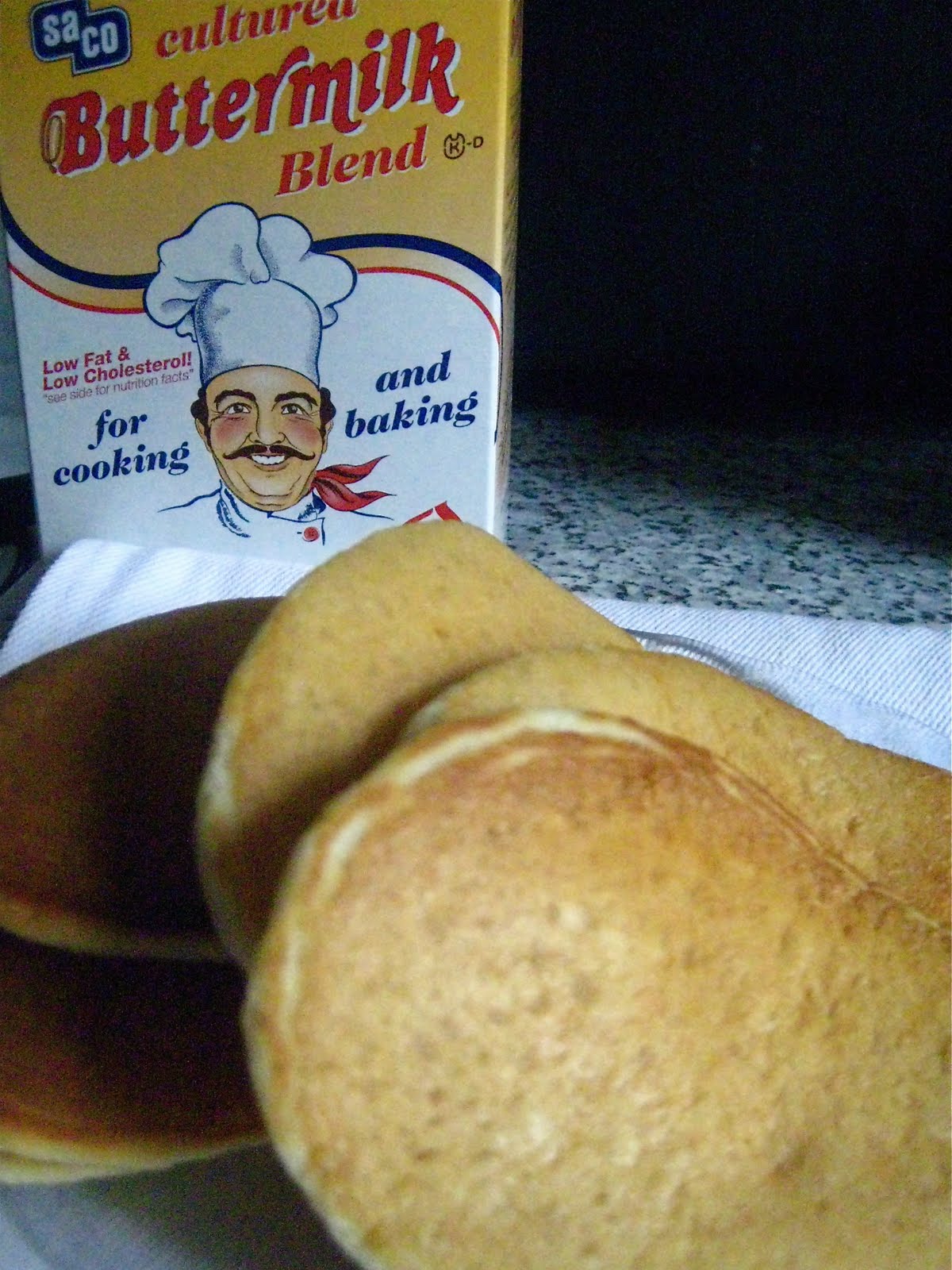
  • Buttermilk: One morning, because I am more of a mad scientist than a baker, I threw in a tablespoon of SACO Cultured Buttermilk.  It's basically powdered buttermilk.  It made the whole batter bubble and bubble and the pancakes were so airy they were practically transparent!  Since then I have been using 1/2 a tablespoon in the recipe and it gives the pancakes a light, fluffiness while maintaining their opacity.

Happy Mother's Day,
Sarah

Monday, February 21, 2011

Oats + Sourdough making a comeback!

Lil and I have no shame in doing/buying/wearing the same things.  In fact, sometimes we go out of our way to do this... case in point: yesterday we went to Sephora to purchase the exact same makeup and the to Urban Outfitters and bought the same flannel dress.  In high school we had a tradition of buying a matching pair of flip flops every summer.  Whenever I discover a way that Lil does something differently than I might I make sure to state, "That's how we are different."  The instances where I use this phrase are few and far between but it's important to note them when they do come up just so that we remember that we are, in fact, different people.

It should come as no shock that we have baked the same loaf of bread on separate occasions.  Remember the Sourdough Oat Bread I made a while back?  The loaf of Oat Bread that Lil made most recently comes from the same cookbook (Good to the Grain) just without the sourdough kick.

In the repetition of baking those loves I noticed a pattern.  The oats were visible (little white flecks) but not detectable in terms of texture/taste.  They didn't bother me at all except aesthetically.  So, I thought why not try the recipe again and soak the oats before hand?  I put the cup of oats into about 1 1/2 cups water and let it be for about 5 hours.  Then, I proceeded with the recipe.  It was a delicate balance to find the right moisture level since I had the wet starter and the wet oats. In the end I got it.  Or so I thought...


But look.. No white oats visible in the bread.  Success!


They are only on the crust where I sprinkled them just before baking.  Beautiful.  Almost... see how the upper right side of the bread is sort of.  Um.  Droopy?  Yeah, droopy.  Welllllllll I don't know how to explain this except to say that my loaf pooped.


The side of the bread fell off and onto the stained oven stone below.  I have no idea why this happened. In the oven of all places?!  I would have thought if it would happen it would have fallen off during it's second rise.  My best guess is that the dough was still a bit too wet and fell off because it was too heavy.  

Regardless, this bread makes a great breakfast spread with peanut butter, jam, or avocado.  

Sourdough loves Oats (soaked).

Oh, and what became of the little dookie I found on the oven stone?  I ate it.
-Sar

PS Lil and I are staging a comeback from our beginning of February blues.  The new Amazonian illuminating clay serum and flannel dresses are just the beginning.  Watch out.

Friday, January 28, 2011

SOURDOUGH Pumpkin Raisin Muffins

For these muffins I used the Pumpkin-Cranberry Muffins from Versatile Vegetarian Kitchen.  I made some minor modifications...

Some spices (cinnamon, nutmeg, cloves, ginger) in with the dry ingredients.

Raisins instead of cranberries.

And some sprinkled sugar in the raw on top.  

They rose beautifully.  The sourdough is happy again.

Sometimes I get a minor sourdough aftertaste but other than that they taste like a pumpkin-y, raisin-y, sweet hearty muffin.

Looking forward to breakfast (as always),
Sarah

Saturday, January 22, 2011

Rustic Sourdough

Our sourdough did not have a very happy end to 2010 or beginning to 2011.  While everybody was off on their winter vacations our sourdough got very, very neglected.  A while back we had frozen the sourdough before we went on vacation and learned not to bake with the batch out of the freezer but to feed and discard at least once.  This time around we did not plan so wisely.  Left the sourdough to fend for itself in the fridge.  And wow.  The sourdough got upset.

I have been nursing it back to health for the past month and I am ready to let it go wild in this KAF Recipe.  I modified it a bit by adding 2 cups whole wheat flour in place of the all purpose.  I only ended up needing about 4 cups of flour total (since whole wheat sucks up more liquid).  I also added 4 teaspoons of vital wheat gluten for fun.  I baked a bit longer than 30 minutes - closer to 40 - because I only did one big boule on the stone:

And it grew up to be a beautiful,

delicious, round loaf.

One of my New Year's resolutions is to treat the sourdough starter with the love and respect it deserves.  We're off to a good start.

XO,
Sarah

PS It turns out my signature baking move is dusting with wheat germ.  Those are the specks you see on top.  Makes a great upper crust.

Sunday, December 12, 2010

Sourdough Olive Bread II

The first time we made Sourdough Olive bread it wasn't so....


flat.  On record, no knead loaves should look a little bit wetter.  This was a crisis/disaster/emergency loaf that ended up delicious.  This rave review coming from the girl who thinks olives taste like slugs.  So you know it was really a good one.  

This was the second attempt.  I hardly wrote anything down but this is basically what happened:

We used...
2 cups whole wheat flour
1/2 cup wheat germ
1 cup bread flour
2 cups sourdough starter
1 cup water
1 cup olives
3/4 cup olive water (because it was just salty/olive-y water)
maybe another whole cup of all purpose when we kneaded...
cornmeal for the dutch oven

We...
1.  Put the flours, liquid and starter together.  
2. Waited 20 minutes.
3. Folded in sat and olives.
4. Left it covered for 12+ hours.  Went out to Indian, Ben and Jerry's for dessert.
5. The next morning we took it out.  Discovered it's a little too wet and folded in some flour:

6. Placed it on a baking stone to rise for another two-three hours.   
7. Came home from a date at Harney SoHo and find this:


Wannabe pizza??!  Not on our watch!  We popped that bubble in the front-center and transfered it carefully to the dutch oven where it had to become a boule.  We turned the oven on it's lowest setting to get a pre-spring oven spring going and then turned it up to 450 for about 45 minutes until the center temperature was 200degrees.  

I have no photograph of the final loaf because it's too delicious to photograph.  Also, it's raining and the light in the apartment right now would do this boule no justice.  Excuses excuses.

Olive you,
Sarah

Wednesday, October 13, 2010

Oats + Sourdough (Oh my!)

Nothing like a controversial national holiday to get me back into the bread blog.  While  I was not posting I made several sourdoughs that I just did NOT write about..Oops.

For this sourdough I decided to get a little inventive.  I read a recipe in Good to the Grain by Kim Boyce (Thanks Emeric!) and decided - why not add some sourdough to it?!  Good to the Grain had been sitting on our shelf since Emeric lent it to me in July (laaame).  Plus I have sourdough to feed.

Sourdough-Oat Sandwich Loaf Inspiration from Good to the Grain
(Printable Recipe)
Yields 1 loaf
Prep time about 10 hours
Cook time 40 minutes

1/2 teaspoon active dry yeast
2 tablespoons warm water
1 pinch of sugar
1 cup rolled oats
1 cup whole wheat flour
1 cup oat flour
1 cup starter
1/4 cup water
3 teaspoons vital wheat gluten
1/2 stick of unsalted butter, melted
1/2 tablespoon salt
2 tablespoons molasses

1. Proof the yeast in warm water with sugar.
2. As the yeast proofs for about 10 minutes, measure out your dry ingredients EXCEPT the salt and stir them together.  Melt the butter while you are at it.
3. Add the yeast, butter, and sourdough starter and water to all the dry ingredients excluding the salt.  Stir until you can't stir anymore and then let it rest for 20 minutes.  This is called autolyse.
To learn more about autolyse click here or search "sourdough" on the top right and read up!


4. Now, add the salt and molasses.
5. Knead for about 10 minutes.
6. Allow the dough to rise for about 45 minutes in a clean, buttered bowl.
7. Shape the dough into a log and place it into a loaf pan to rise.


8. Let it rise for up to 6 hours, or until it has doubled in bulk.  I went babysitting in the meantime.  I would have loved to be available to punch the dough down but it's sourdough and it loves to retard, so I just let it happen.
9. Preheat the oven to 400 degrees F and brush the top crust with a little water/molasses mixture and sprinkle with bran or oats before throwing it in the oven.
10. Bake at 400 degrees F for 40 minutes.  As always, allow to cool before slicing.


Entirely unrelated, but I made these impromptu banana-bran muffins the other day.  There are four bananas in 12 muffins.  Mathematically speaking, a third of a banana per muffin.  I'd post a recipe but I didn't keep track or measure anything I did.  Classic.

These bananas were practically making themselves into banana-based treats.

Happy belated Columbus Day and 10-10-10!
Sarah

PS This bread was okay.  Like any good relationship, oats and sourdough have some things to work on together.  I'll definitely revisit this medley.  The to bake (and to do) list(s) are long and the time is always short.  

Wednesday, August 11, 2010

Whole Wheat Pain au Levain

This bread was divine.


I basically took the original Pain au Levain recipe and made it whole wheat-y.

Whole Wheat Pain au Levain
(Printable Recipe)
2 cups white whole wheat flour
1 cup whole wheat flour
1/2 cup wheat bran
1/2 cup wheat germ
4 teaspoons vital wheat gluten
2-2 1/2 cups sourdough starter
1 cup bread flour (for kneading)
1 1/2 cups warm water
2 teaspoons salt

1. Combine the white whole wheat, whole wheat, bran, germ and vital wheat gluten.
2. Measure out the starter and warm water in a separate bowl.
3. Slowly mix the watered down starter in with the flour.
4. When the mixture becomes to difficult to stir, use the bread flour to dust a clean surface and dump the dough (carefully) onto the floured countertop.
5. Knead in the salt and use up to 1 cup of bread flour.
6. Shape the dough into a ball and place in an oiled bowl.
7. Allow the dough to rise for 12+ hours.
8. Shape the dough into a boule and place into a dutch oven.  Cover and let it rise there for 2 hours.
9. Slash the dough.  Preheat the oven.
10. Bake at 375F for 45-50 minutes.  First 20 minutes with steam and uncovered and the remaining time without steam and covered.  Internal dough temp should read 200F.


Au revoir
- Sarah

PS This bread (with peanut butter and honey) was great fuel for bike riding.  CLICK HERE to sponsor our cycling team, The Spacely Sprockets, in Bike MS NYC.  All proceeds benefit the National MS Society.

Sunday, July 18, 2010

Beets < 3 Bread (it's official)


This past Friday I went to the Union Square Green Market to work on an assignment for my curriculum class.  Naturally, all work and no shopping make Sarah and Julia hungry girls.  I bought lettuce, cucumbers, agretti, beets and a red onion.  Julia bought sugar snap peas.  Not that impressive compared to my list until she also bought a tomato that weighed in to cost 2$ but she only had 1$.  And so that was all that she paid.  One red, huge, fresh tomato at 50% off.

This is the new (to me) vegetable I bought:

Agretti is an Italian vegetable that sort of tastes like salty grass.  In a good way.  I tossed some into my salad and chopped some into my omelet.  It is tasty, but a lot of work.  Similar to kale, it is not fun to eat the stems.  But different than kale it doesn't have big leaves to take off.  The part you eat of this vegetable are those skinny little leaves growing off the tough stem.  Taking those leaves off was unlike any food prep  I have done before.  Still not sure how I feel about the ratio of work to deliciousness with this one.

But look at how cute it is cuddling up with the beets:
The bread is going to get jealous.

Which brings me, conveniently, to the beets.  Martha Rose Shulman published a bunch of delicious looking beet recipes in the NYTimes a couple of weeks ago so they have really been on my mind.  

Lil made a couple of delicious beet boules back in February.  So here we go again.  Letting this "winter vegetable shine in summer!"

Sourdough Beet Bread
(Printable Recipe)
Prep time 1 hour to roast, cool, and puree the beets and about another 3 before it goes in the oven
Bake time about 1 hour
Yields 1 boule

1 cup sourdough starter
1 cup roasted beets, pureed
1/2 cup 8 grain cereal
1/3 cup warm water
3/4 cup whole wheat flour
3/4 teaspoon active dry yeast
2 cups bread flour
2 teaspoons vital wheat gluten
1 3/4 teaspoon salt

First, roast your beets and let them cool before attempting to puree.
Then, soak the 8 grain cereal in the water for 10 minutes.  While it soaks, measure out your starter.
Combine the beet puree with the starter and soaked cereal.  Stir.  The starter should bubble and burp with delight.
Add the whole wheat flour, yeast, and vital wheat gluten.  The dough will still be wet.  Before stirring in any of the bread flour or salt let the starter work for about 20 minutes.  
Now add the salt and as much bread flour as you can stir in.
Once it becomes too difficult to stir, carefully dump it out onto a lightly floured surface and knead in as much of the remaining bread flour as you need to in order to be able to work the dough but still feel that it is slightly tacky.  
Flour a clean bowl for the dough to rise in for about 1 1/2 hours, or until doubled in bulk.
Shape the dough, flour a dutch oven, and place carefully.  Let it rise for another hour or until it is doubled again.
Now, please note, the following cooking method was employed because it is over 90°F in NYC and our apartment does NOT have an air conditioner:
Turn on the oven to 400°F and place the dough, in it's floured dutch oven, inside as it preheats.
After it bakes uncovered for 20 minutes, open the oven door and cover it. 
Bake like this for 20 minutes.  Then turn off the oven.  Do not open the oven door for 20 minutes.
Take the dutch oven out of the oven.  Remove cover and take internal temperature to see that it is 200°F.  
Let it cool before cutting.

For information on roasting beets or other fun beet facts please see Lil's previous post (linked earlier).  One of the things I liked more about those loaves than this one was that the beet was more coarsely chopped leaving bright red flecks throughout the loaf.  This loaf got a really beautiful crust though, nice and chewy, probably because of my brilliant and intentional baking method.

Beet and Bread = BFFL

Aww, makes my heart skip a beet.

- Sar

Saturday, June 19, 2010

Sandwich Bread Narrative

I have not been able to bake (nor post) much because of my summer class schedule.  This morning, I was in the middle of reading for my children's literature course and I decided to start some bread, even though I have enough reading and writing to keep me busy all weekend, why not break it up a little?  The thing is, I didn't waste time looking in any cookbooks.  I just took out the sourdough starter and got started.  This is what happened:

I measured 1 cup of sourdough starter and poured it into a bowl.  I looked at it.  The sourdough is not happy with our mistreatment lately.  Lil used it last week but I feel like it still knows that I neglected it a couple of weeks ago.  Maybe it's just my conscience.

So, I decided to get out the yeast too.  In a separate bowl I mixed 1/2 teaspoon sugar, 1 teaspoon yeast, and 2 tablespoons warm water. While the yeast proofed I added 1 cup white whole wheat, 1/2 cup bread, 1/2 cup rye, 1/4 cup whole wheat flours along with 1 cup warm water.  Oh and 4 teaspoons of vital wheat gluten and 2 teaspoons salt.  The starter burped with delight.  This was getting exciting.

I added the yeast to the sourdough.  A tablespoon of extra virgin olive oil, three tablespoons honey... and then I remembered something weird I had read in my dads "El Molino" cookbook.  In their basic sourdough bread recipe they called for some freaky things.  I figured, since I am not playing by any rules, I might as well try them.  They are the secret ingredients.  They are two things that I would never think to put into a loaf of bread.  In they went....

The dough was pretty wet but I waited about 1 hour before attempting to knead it.  I added in about 1 1/2 - 2 cups of white whole wheat flour in my kneading.  I am not kidding, the dough was real wet.  However, I didn't knead for more than 3-4 minutes until the dough was incorporated.  Then, I plopped it into a well-oiled bowl, did some more reading, went to yoga class.

Fast forward 2 1/2 hours.  The dough more than doubled.  I wasn't sure if I should make it into one loaf or two but I decided on going all in on one loaf.  That way, if it came out horrible it wouldn't feel like such a failure.  I oiled one bread pan let it rise again for about 45 minutes.  Then, I turned on the oven to 375 and put a cast iron pan of water in the bottom just as a brilliant idea struck me.  Why not a sweet honey-water wash to help some wheat germ stick to the top of our loaf?  I mixed up a little bit (but too much) water with some honey and sprinkled wheat germ on top.  I put the extra watered down honey into my Kava tea.

I put the bread in before the oven was up to temperature and let it warm with the oven.  I only left the water in there for 20 minutes.  It baked for a total of 40 minutes.  It cooled.  I ate a slice.  Success!  The secret ingredients are phenomenal!  So good, in fact, that I made a little peanut butter and jelly sandwich.
My dad eats a peanut butter and jelly sandwich for lunch everyday.  Alongside a tall glass of coffee and a cup of yogurt.

This is what I made:


Happy Father's Day (and thanks for the El Molino cookbook) Dad.

Love,
Sarah

P.S. Stay tuned for Lily's famous egg salad sandwich recipe!

Thursday, May 27, 2010

Sourdough-Oat Scones with Cherries and Dark Chocolate


Scones vs. Biscuits
Both are quick breads with baking powder as a leavening agent.  The basic dough of both is quite similar - the difference is in how they are baked and served.
Scones are sweet, served with hot tea (Harney strongly recommended) or coffee.  They often (and in my opinion, should always) contain fruit, nuts, or spices.
Biscuits are typically unsweetened and best served warm with butter or honey alongside a meal, like Vegetarian Chili, for example.

I was inspired to bake a sourdough scone after reading this recipe on Wild Yeast Blog's YeastSpotting.  Some of the ingredients were measured in weight (fortunately, we have a kitchen scale) and so I changed them to volume (cups, teaspoons, etc) along with my modifications to the recipe.

Sourdough-Oat Scones with Dried Cherries and Dark Chocolate
Yields 16 scones
Bake time 23 minutes

3/4 cup white whole wheat flour
1/3 cup oat flour
5 tsp nonfat milk powder
1/4 cup sugar
5/8 teaspoon salt
1 1/2 teaspoon baking powder
3/8 teaspoon baking soda
1 teaspoon lemon zest
8 tablespoons (one stick) unsalted butter
1/2 cup dried cherries
1/2 cup dark chocolate chopped
1/2 cup rolled oats
1 cup sourdough starter
milk
coarse sugar


Preheat the oven to 400°F. 
In a large mixing bowl, blend the flours, milk powder, sugar, salt, baking powder, baking soda, and lemon zest.
Press in cold butter* until it is in pea-sized chunks.
Mix in the dried cherries, dark chocolate, and rolled oats.
Add sourdough starter and mix lightly until the dry ingredients are incorporated.
Turn dough onto a floured surface and pat into a long rectangle.
Cut** into four squares and then cut X's into squares to get four triangular scones, each.  Sixteen scones total.
Place scones on parchment lined baking sheet - brush with milk and sprinkle with coarse sugar.
Bake 23 minutes or until golden brown.

*Why cold butter?  And freezing scones/biscuts...
Cold butter makes biscuits flaky.  Fat coats the proteins in the flours preventing them from forming long gluten strands.  In this way, the butter buffers the layers between the flour-liquid matrix -- as the biscuit bakes in the oven, the butter melts.  Ta da, flaky texture!
Scones/biscuits that use the combination of flour, liquid, baking powder, and solid fat can be frozen for 30 minutes before baking.  After shaping and placing on the cookie sheet, freeze for 30 minutes.  You get a flakier texture because the fat stays solid longer in the oven, holding together the structure as the biscuit rises and bakes.
**It is important to cut biscuit and scone dough with sharp dough cutters.  Cutting with dull knives or glasses destroys "side walls" that freely expand as biscuits/scones bake allowing them to rise to their optimum height.

A side note, directed at my father, on white whole wheat flour.  My dad said, "White whole wheat doesn't make sense to me."  So, here's an explanation: White Whole Wheat flour is made from an albino wheat rather than a traditional red wheat.  It is a milder, lighter 100% whole wheat flour and in recipes it acts a lot more like all-purpose (i.e. you don't need to add as much liquid to compensate if you are substituting).  It's a great compromise between taste and nutrition because it doesn't get a whole-wheaty texture/taste yet it supplies the nutrients of 100% whole wheat.

In my scone research, I found that The Wandering Eater posted on The Best Scones in New York City in 2006.  It's been four years and these  Cherry-Dark Chocolate Scones could at least give Eli's a run for a place in the top 5.

- Sar


Tuesday, May 11, 2010

Sourdough Drop Biscuits with Vegetarian Chili

This week I didn't know if we would use or discard the sourdough starter for it's weekly feeding.. until I found a recipe for Sourdough Biscuits that takes only 10 minutes prep time and about 15 minute in the oven!  To go along with the biscuits we made an original vegetarian chili.

I am not a vegetarian because I love animals.  I am a vegetarian because I hate vegetables.

Vegetarian Chili
Yields approximately 5-6 servings
Cook time 1 hour

Ingredients*
2 tablespoons vegetable oil
1 can of diced tomatoes, unsalted
1 can kidney beans
1 can black beans
1 zucchini
1 yellow squash
some corn
1 yellow onion
2 cloves garlic
2 carrots
3 stalks celery
1 red pepper
1 bunch scallions
greek yogurt
paprika
chili powder
cinnamon
cloves
dried jalapeños
cayenne pepper
cumin
maple syrup
salt

*Ingredients are flexible.  Use your favorite vegetables and beans.  Without the greek yogurt this recipe could be vegan.  I wouldn't understand not using some dairy.  And as you'll see, I didn't include measurements for the spices.  The most significant spice is the chili powder but other than that, it's to taste.  I wouldn't go too heavy on cloves.  Godspeed.

Start with 2 tablespoons vegetable oil and saute the garlic and onions until translucent.  Then, add carrots and celery for a couple minutes.  Then add the zucchini, squash and red pepper and saute for a couple more minutes.    Add the can of tomatoes, corn (drained if it's canned), and beans - one can drained, one can with all the juice.  Add the spices.  An idea of our spice ratios is: 2 tablespoons chili powder, 2 tablespoons maple syrup 1 1/2 teaspoons cumin, 1 teaspoon salt, 1/2 teaspoons cayenne, 1/2 teaspoon cinnamon, 1/4 teaspoon cloves, 1/4 teaspoon dried jalapeños, dash of paprika.
Simmer for 30 - 45 minutes depending on how hungry you are and how homogenous you want your chili.  If you are antsy to get eating more homogenizing will happen in the fridge overnight.  Your leftovers will always be more stewed.  

Top with greek yogurt and scallions and serve along side a warm Sourdough Biscuit.  These biscuits are superb with the chili -- the garlic and cheddar is delicious on its own and the flavors compliment the spicy veggies.  Plus they are quick and easy to boot!

Sourdough Drop Biscuits with Garlic and Cheddar Cheese Adapted from this Tasty Kitchen recipe
Yields millions of biscuits
Cook time 25 minutes

2 cups unbleached all purpose flour
1 tablespoons baking powder
1/2 teaspoon baking soda
3/4 teaspoon salt
1 teaspoon sugar
1 heaping teaspoon minced garlic
8 tablespoons butter (cold but smooshable)
1 1/2 cup shredded cheddar cheese
1 1/4 cup sourdough starter
1/2 cup buttermilk

Preheat oven to 350°F.
Blend flour, salt, sugar, baking powder, baking soda, garlic.  
Smoosh in butter with a fork (or a pastry cutter if you have it)
Stir in cheese (reserve some for the tops if you want a cheese-y topped biscuits)
In a separate bowl, combine starter and buttermilk
Add the buttermilk-starter mixture to the other ingredients.  Stir until it's obvious that you need to incorporate with your hands.  
Scoop rounded tablespoons onto parchment paper lined cookie sheets.  Adding extra cheese to the tops of biscuits now if it suits you.  Also optional, brush the tops with melted butter.
Bake for 12-15 minutes until the tops are a pale golden brown.


Chi-chi-chi le-le-le VIVA CHILE

Sunday, April 25, 2010

Simply Seedy Sourdough

Open Sesame!

I baked a sourdough loaf.  With seeds.  Lots of seeds.  
It's an Ali Baba and the Forty Seeds Sourdough. 


Seedy Sourdough
(Printable Recipe)   Yields 2 loaves

Ingredients:
2 cups ripe sourdough starter
2 cups whole wheat flour
2 cups bread flour
about 1/2 cup of all purpose flour for kneading
1 teaspoon active dry yeast (and a pinch of sugar and about tablespoon warm water to proof)
2 cups water (warm)
2 teaspoons salt
3/4 cup flax seeds
1/4 cup sesame seeds
oil for greasing loaf pans

First, combine the starter with the warm water.  You sort of have to chop it up. 
Combine the flours in a separate bowl and once the water and starter are mixed up start to slowly add the flours.
Let it be for 15-20 minutes.  While you wait, proof the yeast.
Combine and toast up your seeds (you'll know they are toasty when they smell like bird food, but bird food you'd eat).
Add the yeast, salt, and 1/2 cup of seeds and knead the dough for about 5 minutes until it's all incorporated.  Use as much all purpose flour as you need while you knead.  My dough was pretty sticky at first so I used about half a cup to knead.  
Grease a bowl.  
Form a ball of dough.
Place dough into greased bowl and make sure you spin it around in there so the top gets oiled too.
Let it rise overnight in the fridge.
In the morning, take the dough out of the fridge.  Let it warm up for 30 minutes before dumping it onto a floured surface. 
Divide the dough in two.
Shape your loaves and place them into their own well oiled bread pans.
Use some of the remaining toasted sesame and flax seeds on the top of your loaves.
Bake at 350°F for 45 minutes.  Let cool for 15-20 minutes in the pan.  Carefully remove loaves from pans and let cool to room temperature.  


Although it will smell a little like bird food this bread is definitely NOT for the birds.  Flax and sesame are both very valuable nutritionally speaking...
Flax is rich in omega-3 fats and an excellent source of both soluble and insoluble fiber.  "Flax is known as a 'blessed plant' that can bring good fortune, restore health, and protect against witchcraft " (from 101 Foods That Could Save Your Life! by David Grotto).  
Sesame is not just good for getting into magical caves of treasure but also a great source of lignans and phytosterols which have been proven to fight cancer and heart disease.


Since you, loyal reader, must be wondering how Lil and I go through so much bread, I'll disclose our secret:  it's a combination of boyfriends and the freezer.

We share with everybody we can -- boyfriends just happen to be the must willing and readily available samplers.  And when we make a couple of loaves at once, as in this seedy sourdoughy example, we freeze one.

When you freeze a fresh loaf of bread make sure it is totally cool before you seal it tightly in a ziplock and put in into the freezer.  When thawing your bread, just be patient and let it come to room temperature out of the ziplock.  If you are feeling impatient, nuke it in the microwave on it's defrost setting.  Again, no plastic (clearly).

Close Sesame!

-Sarah

End note: When I try another seedy loaf, and if you are ambitious enough to try one yourself, I highly recommend doing something to the seeds on the top -- maybe an egg wash or just brush with some water.  They need some glue to hold them down onto the bread and keep them off of the entire apartment.

And also: It was fantastic to have a successful sourdough after that black bread experience that came out more like a hockey puck than bread.  Those loaves were for the birds.